How I Discover Music
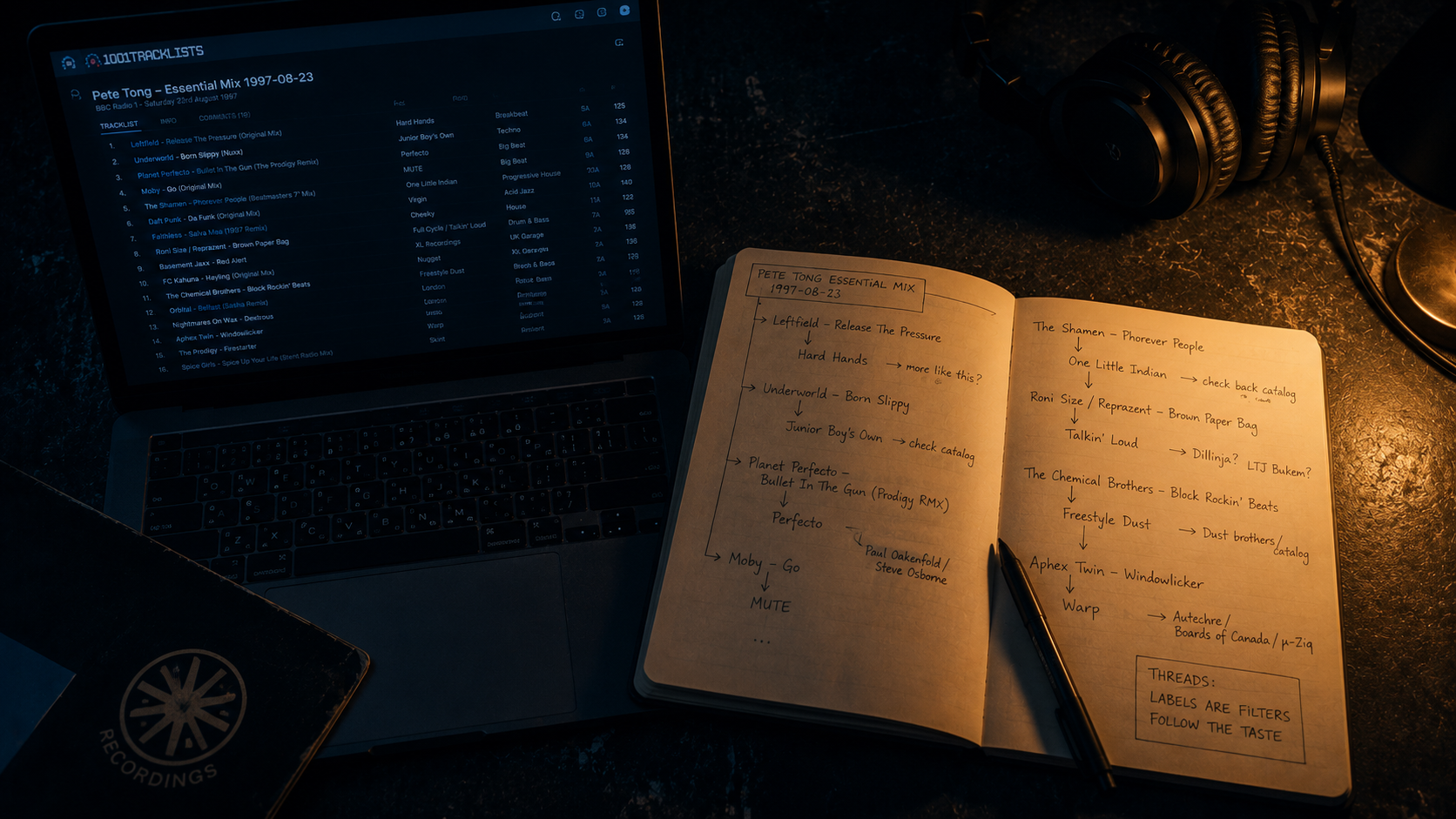
When people ask me how I find new music, what they usually expect is a genre map — a clean tree that tells them where everything fits. I gave up on that idea many years ago.
That's not to say I didn't try. Oh, how I tried. I sat down to make a proper, current breakdown of electronic genres, mostly for myself, to tag my own library. By the time I'd finished the first pass, it was already wrong. Dance music moves faster than anyone can chart it, and the truth is, we never see the present clearly anyway. We only understand which influences mattered in hindsight. Ask someone, "Is this electro or progressive?" and you can argue about it all night. So I stopped sorting by genre and started sorting by what's actually in the track — a boomy 4/4 kick, a sawtooth lead, congas doing the fill work. Those facts don't expire. The label on them does.
That's also, basically, how I find new things. Not by chasing a genre, but by pulling a thread.
It starts with a mix — someone good, with the tracklist published. Pete Tong's old Essential Mixes were a fine place to begin. 1001tracklists, too. They run deep into history and through a huge range of artists, and digging through there, you'll figure out what you respond to fast. You listen, you catch something that grabs you, and then you go to work on it. Look up the track. Note the artist and the label. Pull more from that artist — do they do this consistently, or was it a one-off? Pull more from the label — is this a place that keeps putting out the kind of thing you like? A good label is a filter someone else already built for you. Somebody with taste and skin in the game stood between a hundred demos and the world, letting only a few through. When you find a label whose filter matches your ear, you've essentially hired a scout who's been working to find what you like for years before you showed up. That's worth more than any single track you'll pull off it.
Once you've got an artist or a label you trust, you dig. Find more of their mixes and start the whole loop again from the top — listen, catch, look up, pull. Then go sideways. See who they run with, who they follow, what's sitting on their SoundCloud. Taste clusters. The people you like tend to point at other people you'll like.
Every time I find something fresh, this is what I'm doing. There's no algorithm in it and no shortcut. The reason it works isn't that the steps are clever — they're obvious. It's that the whole thing is built on trusting a person's ear instead of a category, and following it wherever it goes. Categories tell you where music has been. Ears tell you where it's headed.