The Influence of Sci-Fi on Future Beats
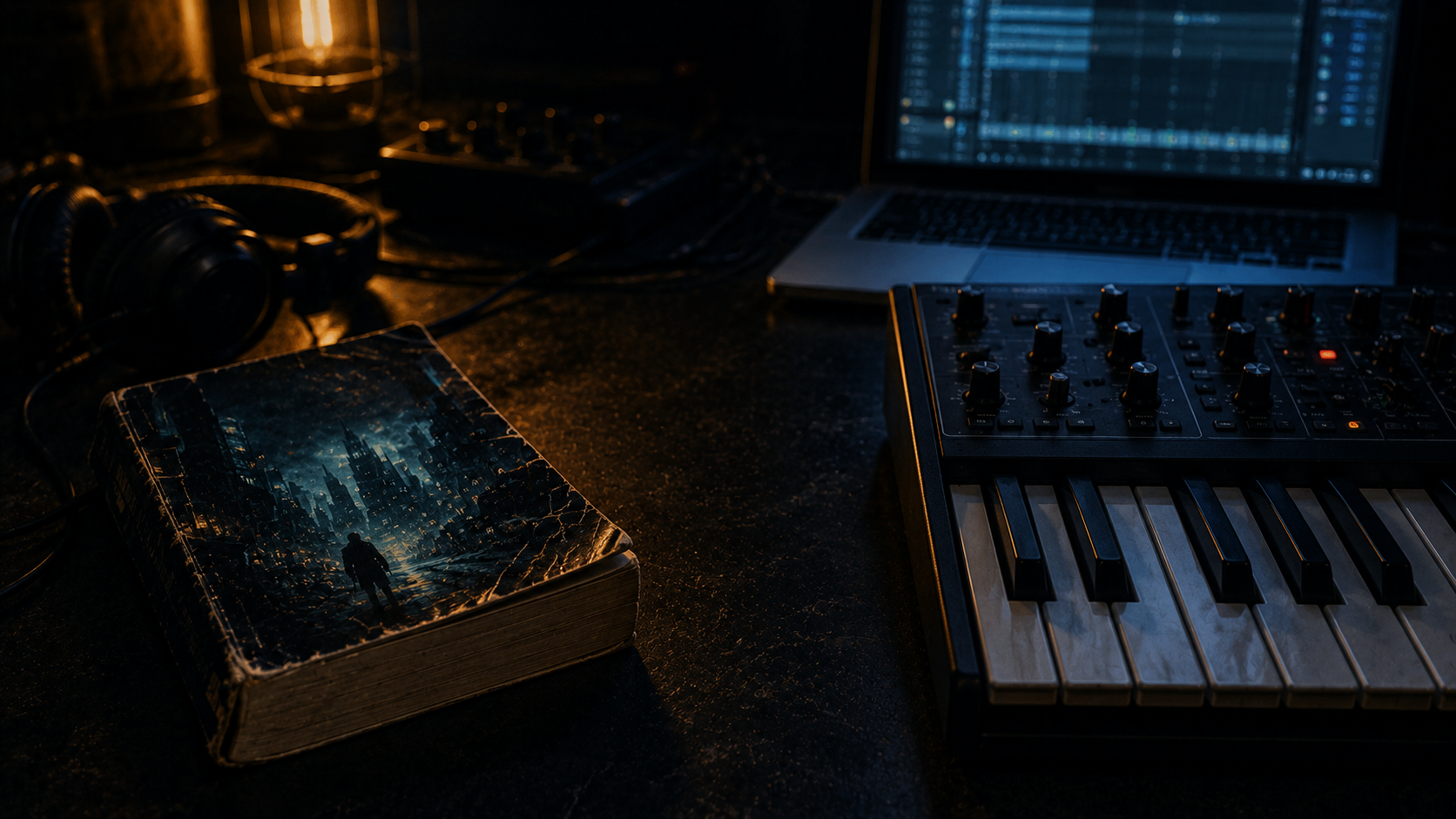
Sometimes a novelist describes music that doesn't exist yet, and then a few years later somebody makes it.
William Gibson is the clearest example I know. He's one of fiction's better futurists — he wrote about a connected global network in Neuromancer and other books well before most people had any reason to imagine one, and a lot of what he sketched out came true. The part that sticks with me, though, isn't the network. It's the music in the margins.
In Neuromancer there's Zion Dub, the sound that plays constantly through a cluster of satellites occupied by a group of Rastafarians who treat it as sacred, part of Jah itself. Gibson describes it as "slow, bass-heavy electronic music… a sensuous mosaic cooked from vast libraries of digitalized pop." Read that line now, and it doesn't sound like prophecy. It sounds like a genre. And here's the part that should stop you: in the book, Zion Dub isn't made by a person. It's generated by an AI, which was an impossible idea when he wrote it and a living controversy today, now that machines are writing pieces that many can't easily tell from the real thing.
He did it again in Idoru, built around a band called Lo/Rez. He never describes their sound in the same close detail as Zion Dub. The band is more of a plot engine than a playlist. But you can draw a line from that book and the world around it to digital punk and the whole cyber-goth aesthetic that followed. The look, the attitude, the idea of a pop act that's half manufactured and half real. Twice, then, Gibson imagined a future music, sketched out the shape of it, and years later, people went and made something that fit. Not because they were following orders. Because the picture was sitting there waiting to be filled in.
So the question is which way the influence actually runs. Did Gibson predict the sound, the way he seemed to predict the communications network? Or did a generation of producers read him at the right age, file the image away, and then go build the thing he'd put in their heads? I don't think it's prediction, exactly, and it's worth being careful about the difference. A prediction is passive — you call the shot and wait to be proven right. What I think happened is active. The book doesn't forecast the music; it commissions it. It hands a kid with a synth a vivid, specific picture of what the future is supposed to sound like, and that kid grows up and goes looking for the gear that gets them there.
That's the part I find more interesting than any single accurate guess Gibson made. Fiction hands you a shape — bass-heavy, machine-made, sacred, cooked from old pop — and someone in a studio fifteen years later takes that shape as the spec and fills it with sound. The future doesn't arrive on its own, fully formed, for us to discover. We hear about it first, in a story, and then we go make it real.