What Is Meter in Hip Hop?
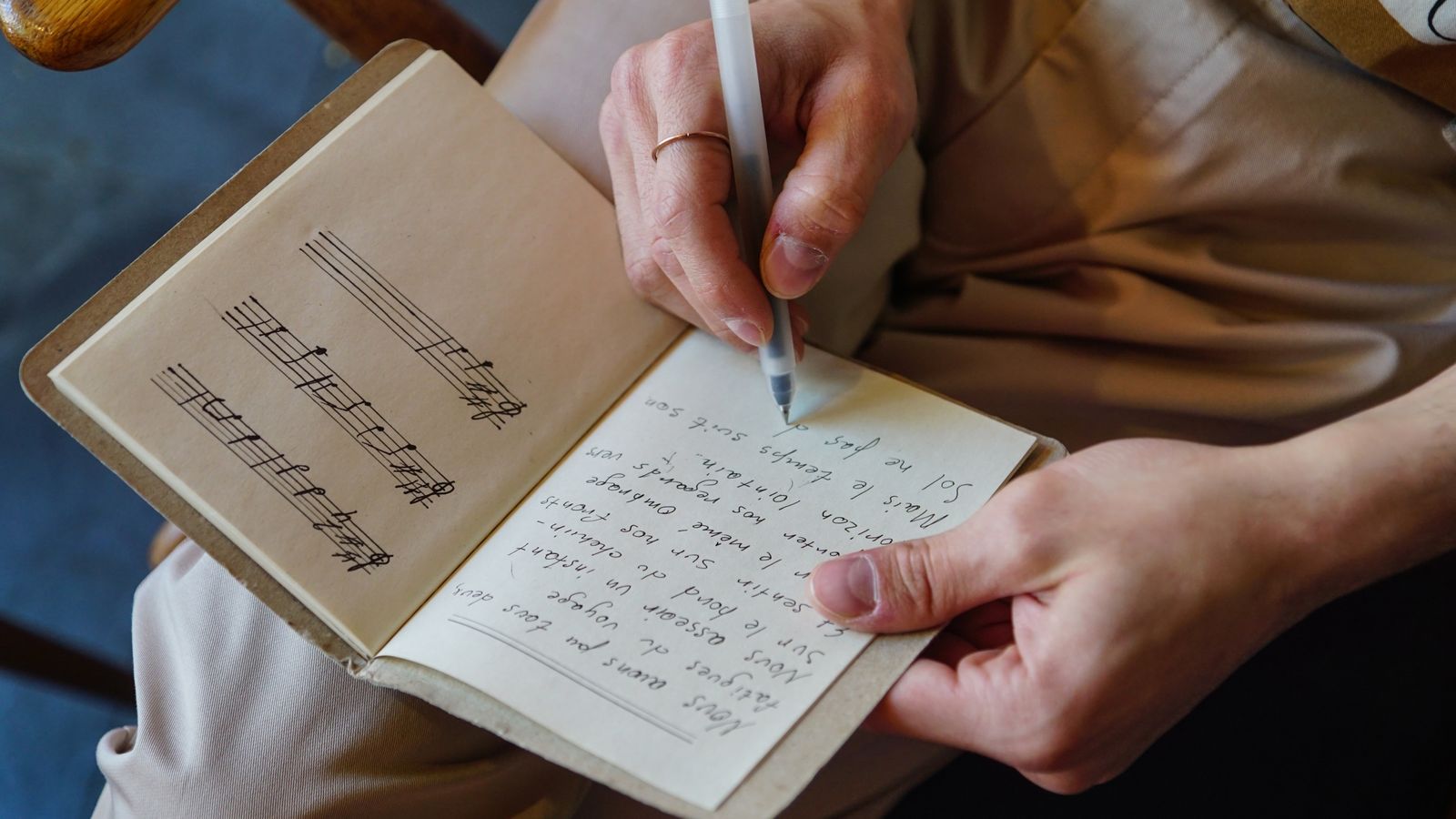
The same machinery Shakespeare ran is running, right now, under a Nas verse. Most people just never had it pointed out.
When people say "meter," they sometimes mean two different things, and it's worth separating them before we go anywhere. In music, meter is the rhythmic structure of the instrumentation — which beats land hard, which land soft, how many there are, how often the pattern comes back around. But there's also poetic meter, which is the rhythmic structure of the words: the stresses and gaps in the lyric itself. That second one is where hip hop gets genuinely interesting, because rap is poetry that has to keep time, and the rules it inherited and the rules it broke tell you a lot about where it came from and what it became.
The rhythm of syllables
English-language poetry and song have leaned on structured meters for centuries, and the most famous is iambic pentameter — ten syllables in five pairs, each pair going soft-hard. A soft-hard pair is called an iamb; five of them gets you "penta." If you hear the stress as a heartbeat, it goes da-DUM da-DUM da-DUM da-DUM da-DUM. That's the pulse under "But soft, what light through yonder window breaks." Same engine drives "Amazing Grace," except there it's a line of four iambs answered by a line of three — Amazing grace, how sweet the sound is four pairs, that saved a wretch like me is three. Tetrameter, then trimeter, the same iamb counted out differently. Once someone shows you the pattern, you can't unhear it. It's not a Shakespeare thing or a hymn thing. It's the natural rhythm a lot of English falls into when you want it to feel inevitable, and it's been doing that work for centuries, which is exactly why it had no trouble surviving the jump into a genre nobody in Shakespeare's day could have imagined.
And it survived into hip hop intact. Listen to Biggie on "Everyday Struggle" — "I'm seeing body after body and our Mayor Giuliani" — and you're hearing the iamb, the same soft-hard heartbeat, four hundred years downstream from Shakespeare. (There's a great Akala TEDx talk on exactly this lineage, the Hip Hop Shakespeare connection, if you want to go deeper.)
But here's the turn: the old poets treated meter as law. Modern lyricists (especially rappers) treat it as a tool. They reach for the rigid structure when it serves them and break it the instant breaking it lands harder. That freedom is the whole modern style. The structure's still there, underneath, as something to play against.
The rhythm of rhymes
There's a sister concept to meter, and it's rhyme scheme — not the pattern of stressed and unstressed beats, but the pattern of where the rhymes fall. The two work together but they're not the same thing; meter is the pulse, rhyme scheme is the architecture sitting on top of it. You can describe a limerick purely by its scheme: AABBA, two lines rhyming, then two more on a different rhyme, then a fifth that loops back to the first pair. That's why a limerick feels like a limerick before you've even registered the joke — the shape is doing half the work. Shakespeare's English sonnet is the high-formality version of the same idea — fourteen lines, all iambic pentameter, locked into ABAB CDCD EFEF GG, with the whole argument of the poem usually turning on that final rhymed couplet. ("Shall I compare thee to a summer's day" — go scan it; the meter and the scheme are exactly that strict, and the strictness is what makes that closing couplet hit.)
Early hip hop sat close to that disciplined end. Most rap before the mid-80s ran a plain AABBCC — couplets, two lines on one rhyme, two on the next, straight down. Picture nearly any Run-DMC record, and you've got it. Clean, hard, structured. And there's nothing primitive about that; the simplicity is the power. The end-rhyme lands exactly where you expect it; the crowd can lock onto it, and the whole thing hits like a drum pattern because, in a sense, it is one. The early style worked the way a four-on-the-floor kick works — you don't admire it for surprising you, you ride it because it doesn't.
Then the lyricists started deliberately pulling the structure apart. They moved rhymes off the ends of lines and into the middles. They built longer chains, rhyming a syllable buried in one line against the end of the next, stacking patterns inside patterns. The masters of that complexity are people like Nas and Eminem, and the striking thing is they're complex in completely different ways.
Take the opening of Nas's "N.Y. State of Mind": "Rappers I monkey flip 'em with the funky rhythm I be kickin' / Musician, inflictin' composition of / Pain, I'm like Scarface sniffin' cocaine / Holdin' a M-16, see, with the pen I'm extreme, now." Pull the rhyme threads out, and they're woven, not stacked. "Monkey flip 'em" pairs with "funky rhythm", and landing three rhyming words inside one compound is just Nas showing off. "Kickin'" ties to "inflictin'". "Musician" answers "composition". Then "pain", "cocaine", and "pen" thread through, and "M-16" pairs with "extreme". The rhymes don't sit politely at the ends of lines; they reach backward and forward, tying bar to bar so the whole verse locks together as one structure. That intricacy, sitting on top of lyrics that actually mean something, is a real part of why he's held up as one of the greatest.
Eminem gets to the same place from the opposite direction. Where Nas weaves, Eminem takes a small set of rhyming syllables and scatters them — reusing a tight kit of sounds across long, irregular stretches. There's a verse on "Renegade" where he takes three rhyming syllables and threads them through six fifteen-syllable lines, a different number of beats between each hit, so the pattern is dense but never mechanical. You can almost hear him decide how long to make you wait before the next one lands — sometimes right on top of the last, sometimes held back for half a bar — and that control over the gap is the craft. Nas builds a web you have to step back to see whole. Eminem builds a pattern you feel in your teeth as it goes by. Same raw material — internal rhyme, broken structure — arranged by two completely different minds, and that's the whole point about modern hip hop. The form is loose enough now that the structure becomes a fingerprint. You can tell who wrote a verse by how they break the rules, not whether they break them.
The thing to walk away with in talking about hip hop and about Shakespeare is that they don't live on opposite ends of culture. The story isn't that one is disposable and the other eternal. They're running the same equipment — meter, rhyme, stress, the tension between keeping a rule and breaking it for effect. The early MCs inherited the strict forms. The modern ones learned the forms well enough to dismantle them in public. That's not music drifting away from poetry. That's poetry, still alive, still being pushed by people most of the literature departments haven't gotten around to reading yet.