What Separates Amateurs From Pros
Discipline. That's the answer, and the rest of this post is just me showing my work.
Take "pro" literally for a second — someone who makes their living from music. The moment you define it that way, the biggest thing separating them from everyone else turns out to have almost nothing to do with the music. It's the habits around the music. If this is how you eat, you have to deal with the business of it: selling records, booking the tour, landing the endorsement, moving the merch. You can't put food on the table if none of that happens, and none of it happens on its own. You can't pretend that part isn't there. And knowing it's there changes how you work. It puts a kind of professionalism into the creative process, whether you want it there or not — not because someone's making you, but because the rent is, and the rent doesn't care whether you felt inspired this week.
Chuck Close said it cleaner than I can: "Inspiration is for amateurs. The rest of us just get to work." Every producer I know personally whose records you'd actually recognize works like that. Not because they're cold about it — because the discipline is what lets the art happen at all.
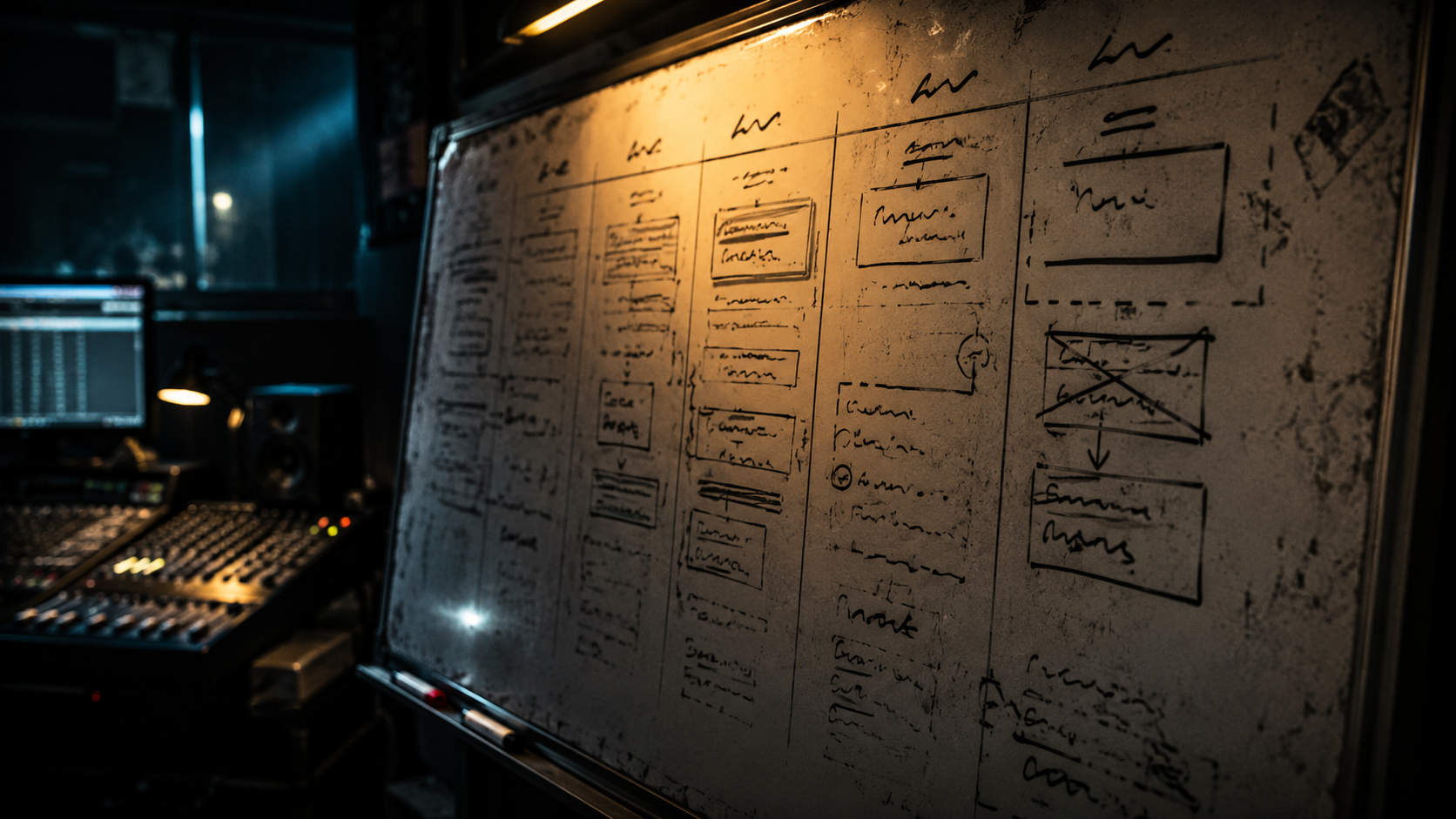
One of them runs his week like a schedule. Blocks of time, each with a job: sound design here, composing there, then mixing, mastering, the social media, the business admin. He puts out records, runs a label, scores games, and tours. None of that juggling survives without treating the craft as a career — something that asks for commitment, not just talent and a good night.
Now, the obvious objection. Does that mean you can't work like a pro if you've got a day job? That you need eight clear hours a day, or it doesn't count? No. You scale the time to what you've got. Don't have eight hours? Fine — do you have two? Then make those two hours mean something. Decide before you sit down what you're going to do with them. Don't noodle around waiting for inspiration to walk in. Tell yourself: Monday through Wednesday, I'm designing sounds and building a sample pack. Thursday and Friday, I'm composing a single out of them. Where I land by Friday tells me what next week looks like. Two deliberate hours beat eight aimless ones, every time.
That's the whole thing, really. The amateur waits to feel like it. The pro shows up to the appointment they made with themselves, on the day they said they would, whether the feeling came or not. The second approach is what gets records finished.